Replacing a collapsed stormwater pipe just 4m underground and in close proximity to residential properties required a solution that minimised excavation and disruption.
Kerry Drainage & Civil used pipe bursting to replace 35m of concrete pipe with new HDPE, successfully completing the work without damage or complaints from neighbouring properties.
Kerry Drainage & Civil was engaged by Healthy Waters to replace a section of 300mm-diameter reinforced concrete stormwater pipe that had collapsed beneath and around a number of residential properties. With the existing pipe located approximately 4m deep and close to houses and garages, conventional open-cut replacement would have required significant excavation and disruption.
Pipe bursting was selected by the client and designer as the preferred methodology, allowing the existing pipe to be replaced along its existing alignment while significantly reducing the amount of excavation required.
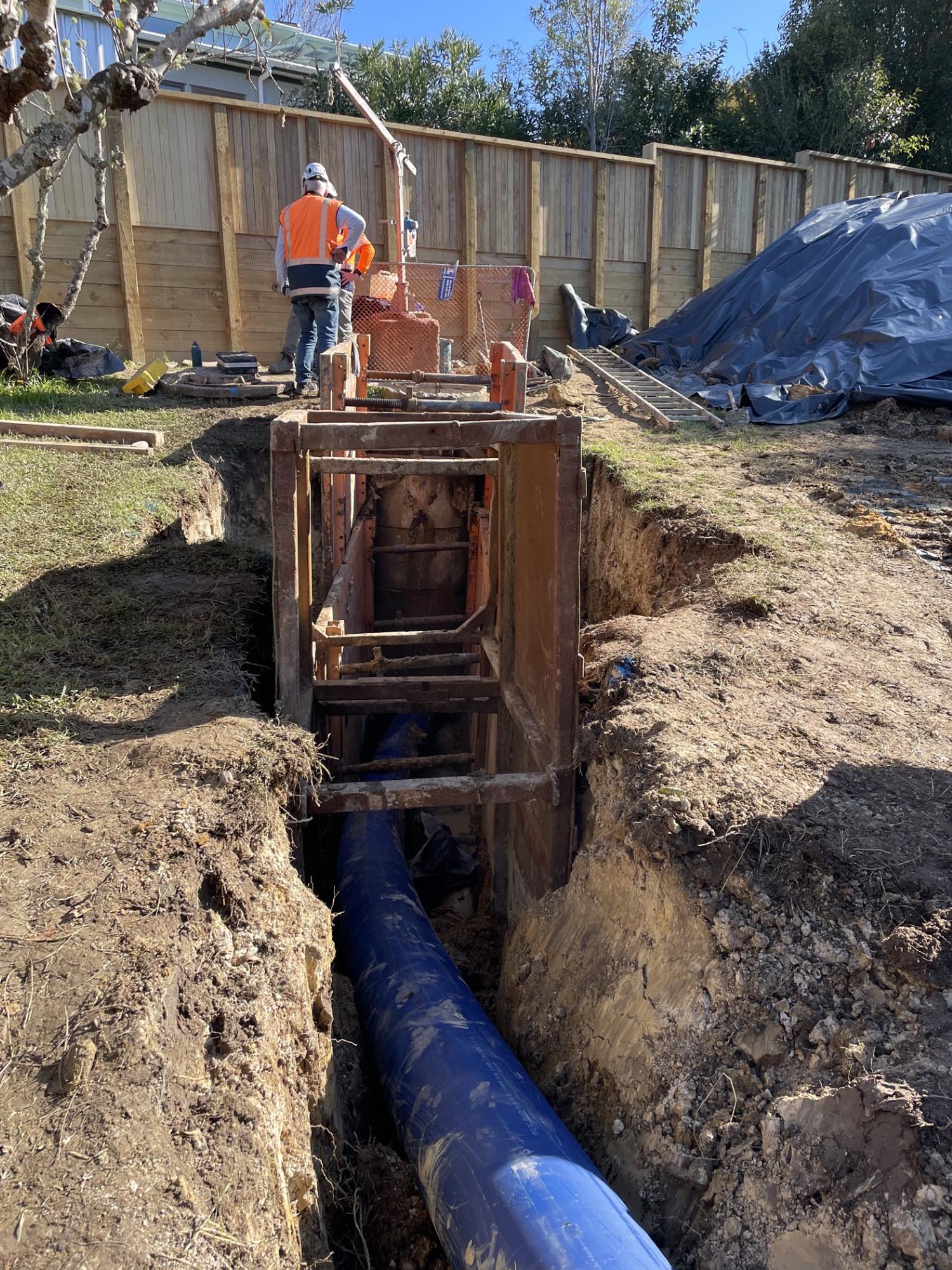
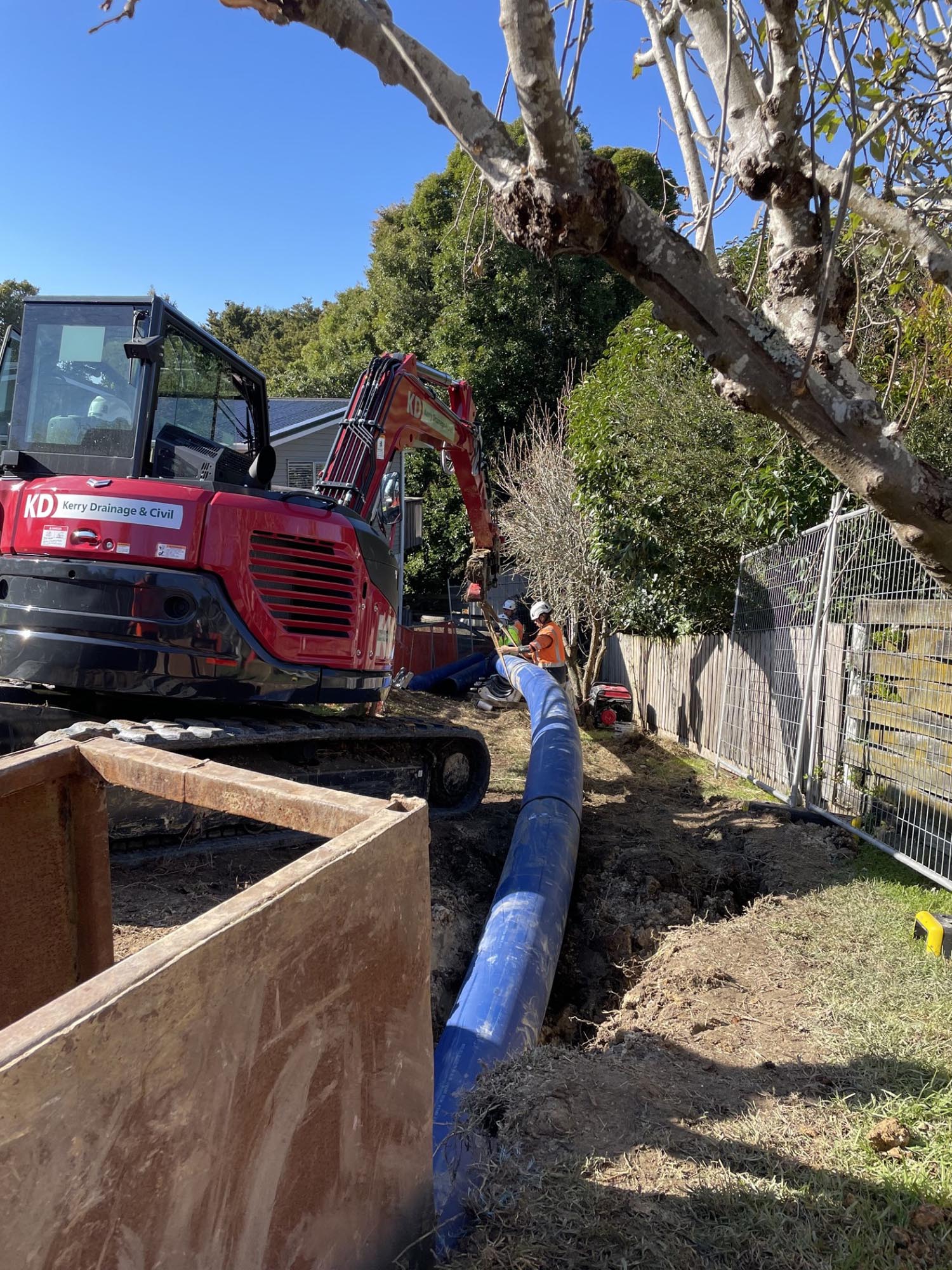
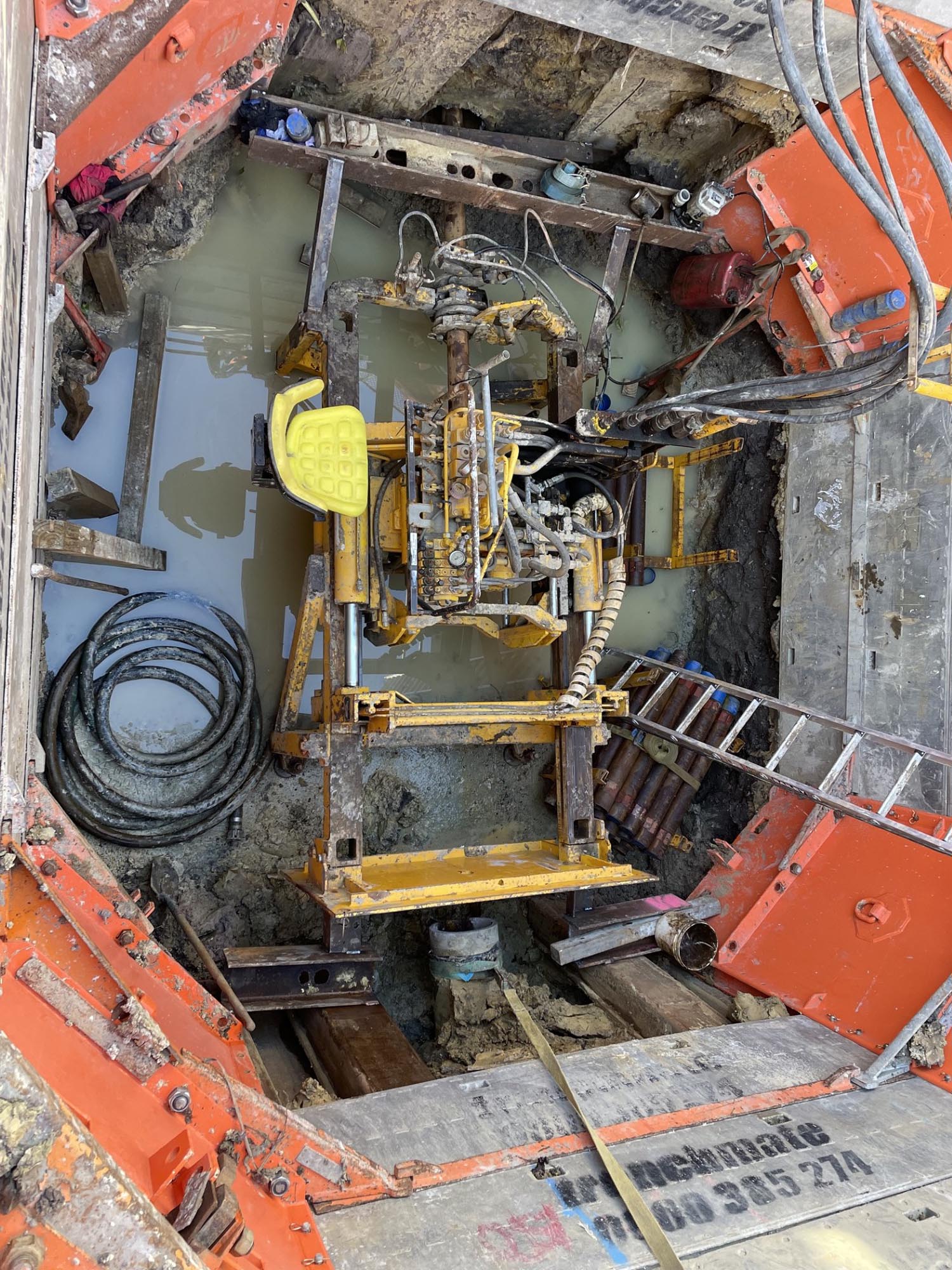
Kerry Drainage & Civil used its Perforator PB155 pipe bursting rig to burst the existing 35m section of 300mm reinforced concrete pipe and pull a new 355mm OD HDPE pipe into position. The bursting head and pulling assembly were custom fabricated specifically for the project.
One of the key challenges was creating a suitable 4m-deep bursting pit within a highly constrained residential environment. With the existing alignment passing through several residential properties, there were limited locations where a large excavation could safely be established. KDCivil successfully installed an Octi-box in close proximity to a residential house and neighbouring garage, providing a stable and controlled working area for the bursting operation.
At the downstream end, the new HDPE pipe was brought into position through an excavated lead-in trench connecting to an existing manhole on the neighbouring property. A new manhole was also constructed at the upstream end within the bursting pit.
The trenchless replacement was successfully completed with no damage or complaints from the houses in close proximity to the works. Ground stabilisation and improvement works were also undertaken at the tomo location to mitigate the risk of ongoing settlement or consolidation.
The project demonstrated how trenchless construction can provide a practical solution for replacing failing infrastructure in tightly constrained residential environments, reducing excavation while maintaining control over safety, quality and neighbouring properties.